Preventive Care
How Often Should You Get Your Teeth Cleaned?
The short answer
Many adults do well with a cleaning and checkup every six months, but that’s a sensible default, not a medical rule. The American Dental Association recommends regular visits at intervals your dentist sets for you, based on your own risk of cavities and gum disease. Some people need to come in more often; a dentist may space visits further apart for someone whose mouth is healthy and low-risk.
“See you in six months” might be the most familiar sign-off in dentistry. It’s a sensible default for many people. But it isn’t a medical rule, and for some people it isn’t the right schedule at all. Here’s what actually decides how often you should have your teeth cleaned, what happens during the visit and where X-rays fit in.
Is every six months a rule?
Not exactly. The American Dental Association recommends regular dental visits at intervals your dentist determines, and its patient website puts it simply: some people need to see the dentist once or twice a year, and others need more visits.
Research supports that flexible approach. A 2020 Cochrane review of check-up schedules for adults found little to no difference in cavities or gum bleeding over four years between people on six-month, 24-month and risk-based schedules. A 2013 study of dental insurance records found no significant difference in tooth loss between one and two preventive visits a year for adults with no major risk factors, while adults with risk factors such as smoking or diabetes did better with two.
The takeaway: six months is a good place to start, but your schedule should match your own mouth, and it can change as your health does.
What decides how often you need a cleaning
At each checkup, your dentist weighs your risk of cavities and gum disease and suggests when to come back. These are some of the things that can mean more frequent visits:
- Gum disease, now or in the past. Gum disease can leave deeper pockets around the teeth that are hard to keep clean at home, and plaque that hardens into tartar can only be removed professionally.
- Smoking or using tobacco. It’s the most significant risk factor for gum disease, according to the National Institute of Dental and Craniofacial Research.
- Diabetes. People with diabetes are more likely to have gum disease, and high blood sugar raises the risk that it progresses.
- Pregnancy. Hormone changes make gingivitis, the earliest stage of gum disease, more likely.
- A history of cavities. If you’ve needed fillings often, more frequent checkups help catch new decay while it’s small.
If your gums are healthy, you rarely get cavities and you keep up with brushing and cleaning between your teeth, your dentist may keep you on a six-month schedule or, in some cases, suggest a longer gap.
What happens at a cleaning and checkup
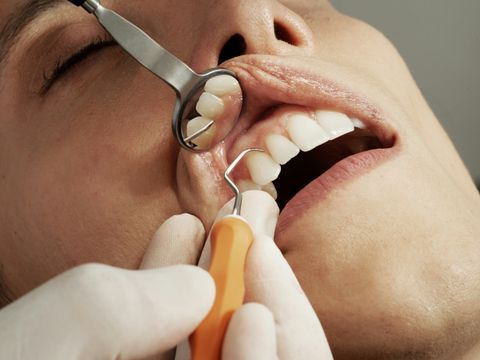
A routine preventive visit usually includes these steps:
- A health update. Medicines, health conditions and pregnancy can all affect your teeth and gums, so your dental team will ask what’s changed since your last visit.
- A gum check. The hygienist or dentist gently measures the small pocket between each tooth and the gum. In a healthy mouth these pockets are usually 1 to 3 millimeters deep. Deeper pockets can be a sign of gum disease.
- Removing plaque and tartar. Brushing and flossing remove plaque, but once it hardens into tartar, only a professional cleaning can take it off.
- Polishing. This smooths the tooth surfaces and removes surface stains.
- An exam. Your dentist checks for cavities, cracks and worn fillings, and screens for signs of oral cancer.
- X-rays, if you’re due. Not every visit includes them. More on that below.
You’ll finish by talking through anything your dentist found and when you should come back.
How often do you need dental X-rays?
X-rays show what an exam can’t, like decay between teeth or under an old filling. But there’s no fixed schedule. The ADA says there’s no “one size fits all” interval, and guidance from the FDA and ADA ties the timing to your own history and risk.
For adults coming in for routine checkups, that guidance suggests bitewing X-rays, the ones that show your back teeth from the side, about:
- Every 6 to 18 months if you have cavities or a higher risk of them
- Every 24 to 36 months if you have no cavities and aren’t at increased risk
Your dentist may suggest a different schedule after examining you. Our office uses digital imaging, and when treatment such as a dental implant calls for a three-dimensional view, we have CBCT imaging on site.
A regular dental X-ray uses very little radiation: about 0.005 millisieverts (mSv), roughly half the natural background radiation you get on an average day. Our radiation dose chart shows how it compares with a flight, a chest X-ray and other everyday doses.
Don’t wait for your next cleaning if…
A regular schedule is for routine care. Call your dentist sooner if you notice:
- Gums that bleed when you brush or floss and haven’t improved after about two weeks (our guide to why gums bleed explains the common causes)
- Tooth pain, or sensitivity to hot or cold that lingers
- Swelling in your gums, face or jaw
- A tooth that feels loose, or a bite that feels different
- A chipped tooth, or a filling or crown that has come loose
Swelling and severe pain need prompt attention. Our emergency dentistry page explains what counts as urgent and what to do while you wait.
Getting more from every visit
A cleaning resets the clock, and what you do between visits keeps it that way:
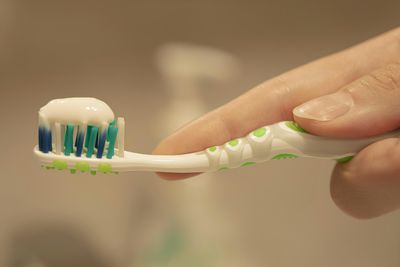
- Brush twice a day for two minutes with a fluoride toothpaste and a soft-bristled brush.
- Clean between your teeth once a day with floss or another interdental cleaner.
- Replace your toothbrush every three to four months, or sooner if the bristles are frayed.
- Bring a list of your medications to each visit, and mention any changes in your health.
- Ask why your dentist suggests the schedule they do. A good dental team will explain its reasoning.
Booking a cleaning in Bloomfield Hills
If it’s been a while since your last cleaning, the best time to get back on track is now. Our three dentists see patients of all ages for cleanings, exams and preventive care, and we’re open Monday through Friday, with Monday and Wednesday evenings until 7 PM and select Saturday mornings, so a checkup can fit around work and school.
Most dental plans cover routine cleanings and exams. We accept many plans and file your claims for you. Request an appointment or call us at (248) 290-2900.
Sources
- Your Top 9 Questions About Going to the Dentist, American Dental Association (MouthHealthy)
- American Dental Association Statement on Regular Dental Visits (2013, reprinted), Hygienetown
- Recall intervals for oral health in primary care patients (Fee PA et al., 2020), Cochrane Database of Systematic Reviews
- Patient stratification for preventive care in dentistry (Giannobile WV et al., 2013), Journal of Dental Research
- Selection of Patients for Dental Radiographic Examinations, U.S. Food and Drug Administration and American Dental Association
- X-Rays/Radiographs, American Dental Association
- Radiation Dose Chart, xkcd
- Periodontal (Gum) Disease, National Institute of Dental and Craniofacial Research
- Dental Cleaning, Cleveland Clinic
- Diabetes, Gum Disease, & Other Dental Problems, National Institute of Diabetes and Digestive and Kidney Diseases
- Pregnancy and Oral Health Facts, Centers for Disease Control and Prevention
- Understanding Your Dental Insurance: From Cavities to Cosmetic, National Association of Insurance Commissioners
- Toothbrushes, American Dental Association
- Brushing Your Teeth, American Dental Association (MouthHealthy)
Quick Answers
More about cleanings and checkups
Short answers to the follow-up questions people often have. Don’t see yours? Call, and our team will help.
Call our front desk
(248) 290-2900
Is it bad to go a year or more without a dental cleaning?
It depends on your mouth, which is why it’s worth checking in. Plaque that hardens into tartar can only be removed with a professional cleaning, and gum disease often starts with swollen, red gums that bleed easily, which are easy to overlook. If it’s been more than a year, book a checkup so your dentist can look things over and suggest the right schedule from here.
What’s the difference between a regular cleaning and a deep cleaning?
A regular cleaning removes plaque and tartar from your teeth to keep healthy gums healthy. A deep cleaning, called scaling and root planing, is a treatment for gum disease: it cleans deeper below the gumline, in the pockets gum disease creates, and smooths the tooth roots. Your dentist recommends one based on what your gum check shows.
Does insurance pay for two cleanings a year?
Most dental plans cover preventive care such as cleanings and exams, often in full, but each plan sets its own limits on how many visits it covers in a year. Check your plan before you book. If your dentist recommends cleanings more often, ask your insurer how the extra visits are covered. Our guide to using your dental benefits before they reset has more on making the most of your coverage.